Why Microsoft Azure Well-Architected Framework Can Improve Architecture


Small and medium-sized businesses often face a common challenge: the absence of experienced cloud engineers. Due to limited resources, teams typically choose the quickest path—getting things done in the easiest, fastest way. Unfortunately, this approach often leads to solutions that aren't secure, cost too much, and become nearly impossible to extend or manage effectively.

Recognizing this critical challenge, Microsoft Azure has developed the Well-Architected Framework. This comprehensive set of guidelines and best practices helps businesses assess their existing solutions and guides them toward building robust, secure, cost-effective, and manageable cloud infrastructures from the start.

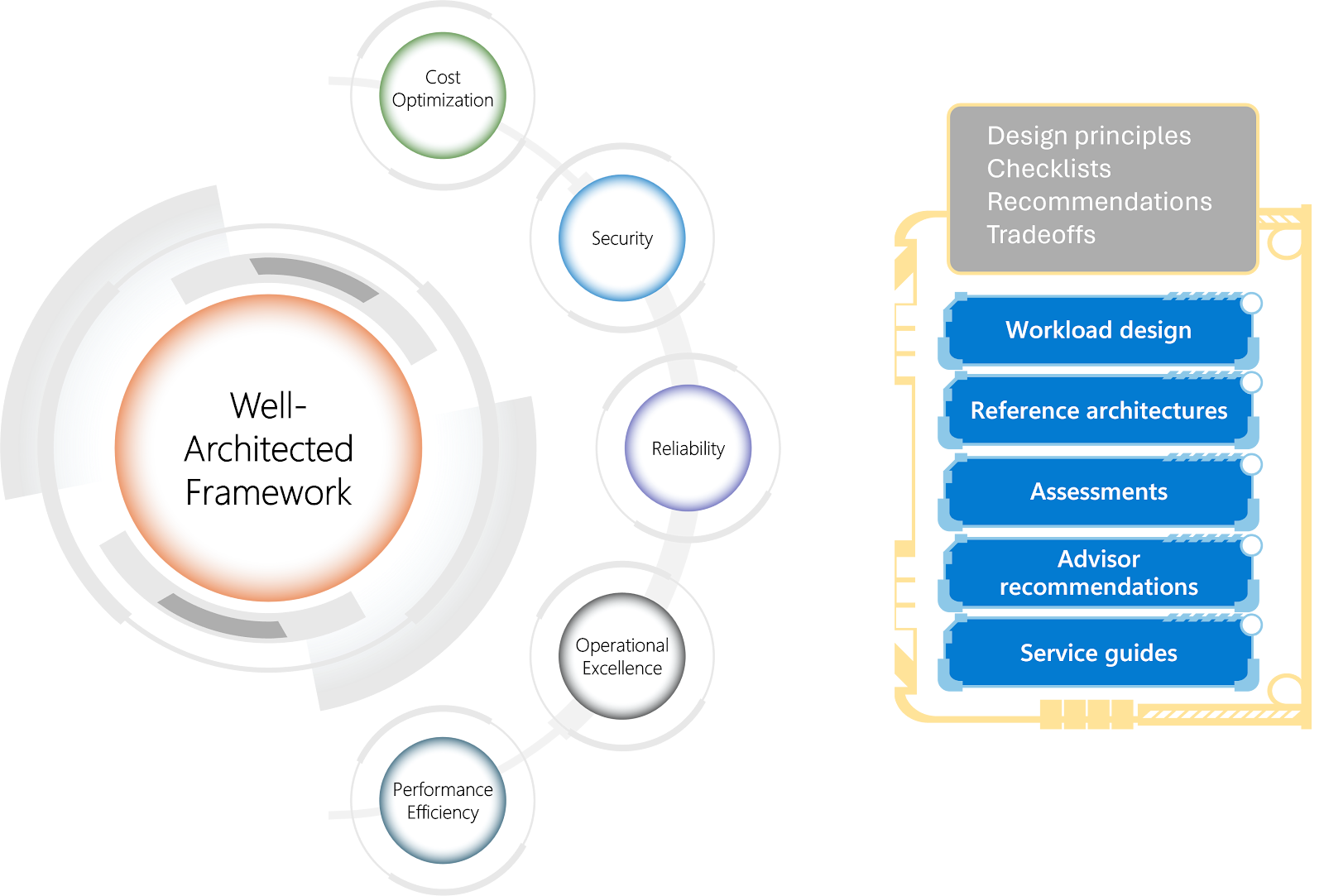
The Azure Well-Architected Framework is structured around five essential pillars:

  • Cost Optimization: Ensuring that cloud resources are used efficiently and effectively, reducing unnecessary expenses.

  • Operational Excellence: Focusing on the ability to run and monitor systems effectively, ensuring continuous improvement and optimal performance.

  • Performance Efficiency: Enhancing workloads to meet business needs and efficiently respond to changes in demand.

  • Reliability: Ensuring solutions are resilient, highly available, and recoverable in case of disruptions.

  • Security: Protecting applications and data through robust security measures, risk management, and compliance adherence.

Specifically, the framework helps architects:

  • Identify and mitigate risks early, preventing costly architectural flaws and future rework.

  • Adopt proven best practices, ensuring consistent quality and security standards.

  • Achieve scalability and manageability, enabling easier expansion and adjustment as business requirements evolve.

  • Optimize resource usage and cost efficiency, avoiding wasteful spending and ensuring economic viability.

Even beyond Azure, applying these structured principles can lead to significant improvements in the resilience, effectiveness, and adaptability of any technical architecture. For any SMB embarking on their cloud journey, embracing the Azure Well-Architected Framework—or any structured architecture assessment—can significantly improve outcomes and sustainability. Don't just do it the easy way—do it the right way!

Comments

  1. I've seen many projects that lack proper frameworks and structured approaches.
    "Don't just do it the easy way—do it the right way!" — such a great quote!

    ReplyDelete
    Replies
    1. Thanks! Yes, we have a lot of different methodologies and practices for software architecture, and it’s still really hard to choose the right one—or even maintain and follow it as the project grows.

      Delete

Post a Comment

Popular posts from this blog

Microsoft Azure Well-Architected Framework - Maturity models

The Azure Well-Architected Framework has always been a great way to assess and review workloads. But with the recent updates—especially the introduction of maturity levels —it’s becoming much more than just a checklist. 💡 It’s evolving into a concept. Not only can teams review their architecture, but they can now score, track progress, and continuously improve . The maturity model provides clear stages—from establishing a solid foundation to achieving future-proof agility—making it easier to understand where you are today and where you should aim tomorrow. Why is this important? ✅ It transforms reviews into a roadmap for growth ✅ It allows measurable scoring of architecture maturity ✅ It pushes teams to focus not only on compliance, but also on resilience, agility, and future-readiness Each update makes the Azure Well-Architected Framework better and stronger —helping organizations align technology decisions with long-term business success. 👉 In my view, this is the right dire...

Coinbase x402 is great option for paymant per request!

  🚀 What is Coinbase x402? x402 is a new open payment protocol built by Coinbase that revives the long-forgotten HTTP 402 “Payment Required” status and turns it into a modern, internet-native payment layer . Using stablecoins (such as USDC ) directly over HTTP, x402 allows services: APIs, websites, or digital content platforms to charge per request. At the same time,  clients (including AI agents and automated systems ) can pay programmatically , without accounts, subscriptions, or human interaction. In simple terms: request → pay → get response , all at the protocol level. How It Works (Simplified) A client requests a protected resource (API, data, article, service). The server responds with HTTP 402 Payment Required , including payment instructions. The client (app or AI agent) generates a payment transaction using its wallet. The client resends the request with payment details included in HTTP headers. The server verifies the payment and immediately ret...

Microsoft Azure Well-Architected Framework - Reliability

Reliability is a foundational pillar when building resilient systems, especially for critical components. Outages and malfunctions pose serious risks to any workload, so a truly reliable system must be designed to detect, withstand, and recover from failures within an acceptable timeframe. It must ensure continued functionality and maintain availability so that users can access services as expected, both in terms of uptime and quality. 🔧 Aligned with Azure’s Reliability Checklist Keep it simple and efficient Strive for a solution that meets requirements without unnecessary complexity—simplicity simplifies reliability Identify and prioritize flows Map out user and system flows, assess their criticality, and focus engineering efforts on those with the highest business impact Conduct failure mode analysis (FMA) Investigate every dependency and component with a methodical FMA to uncover weak points, and design mitigation strategies accordingly Define clear reliability and r...